1. Start with Compressor Type: The Foundation of Oil Selection
Reciprocating Compressors
For classic reciprocating models like the 6F-50.2 and 4FC-3.2:
-
If using R22 refrigerant, the only suitable option is B5.2 mineral oil. Pay strict attention to oil fill volume:
- 4FC-3.2 requires only 1.8L
Underfilling causes insufficient lubrication; overfilling increases compressor load.
-
If using eco-friendly refrigerants (e.g., R134A, R404A), switch to synthetic POE oil:
- Choose BSE32 for daily condensing temperatures below 55°C (e.g., supermarket refrigerators). Its water content is <50ppm, preventing ice blockage when mixed with refrigerants.
- Choose BSE55 if condensing temperatures often exceed 55°C (e.g., industrial refrigeration in high-temperature environments). It has stronger anti-decomposition performance, reducing oil loss by 30%.
- BSE55:

2. Screw Compressors: Larger Variations by Operating Conditions
Screw compressors demand more precise oil matching based on working scenarios:
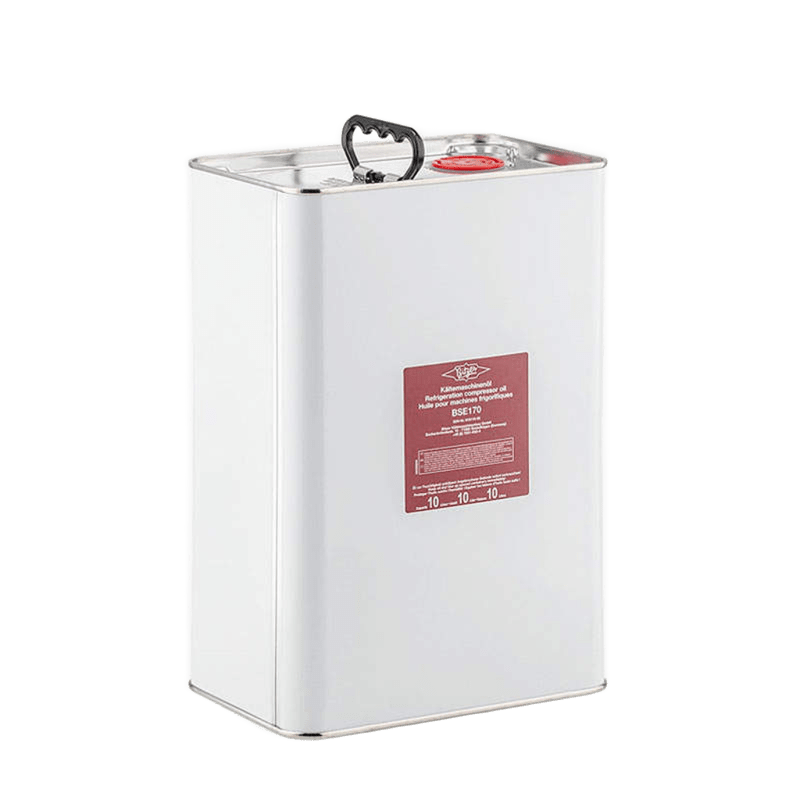
BSE170:
3. 4-Step Practical Checklist
-
Check compressor model: "F" = reciprocating; "CSH/HSK" = screw (found on the compressor nameplate).
- Confirm refrigerant type: Listed on the equipment nameplate—never mix oils for R22 and eco-friendly refrigerants.
- Match oil to operating conditions: Refer to Bitzer’s official "Condition-Oil Compatibility Chart" (available on Bitzer’s website) for condensing/evaporating temperatures.
-
Verify oil fill volume: Underfilling triggers motor protection; overfilling may cause excessive discharge temperature.


